
Verified Snellville Directory Sources
No authoritative page inspected identifies a dedicated Snellville city directory publisher, exact year run, reverse-directory set, or digitized sample entry. That gap is useful because it prevents a false “Polk” chronology. The verified shelf is broader and often richer. It combines Gwinnett Historical Society publications, archive finding aids, local historical collections, library databases, federal census schedules, and official land or death records.
| Collection | Years | Where held | Access |
|---|---|---|---|
| Gwinnett census transcriptions | 1820, 1830, 1840, 1860, 1880, 1900 | Gwinnett Historical Society | Indexed publications and library |
| Gwinnett marriage abstracts | 1833 to 1900 | Historical Society | Research library or publication |
| 1890 tax digest | 1890 | Historical Society | Published census substitute |
| Georgia death certificates | 1919 to 1943 | FamilySearch via Georgia Archives | Free account and images |
| Snellville Consolidated School | Through 1957 | Historical Society research/publication | Students, teachers, photos, index |
| Federal census databases | Public through 1950 | GCPL databases and NARA | On-site or library login by product |
These are not interchangeable. A tax digest usually follows taxpayers and land, while a census identifies enumerated household members. A school index places students and teachers in a community. A historical city directory or phone book normally identifies a listed subscriber or householder, not everyone under the roof.
Gwinnett Archives for Snellville
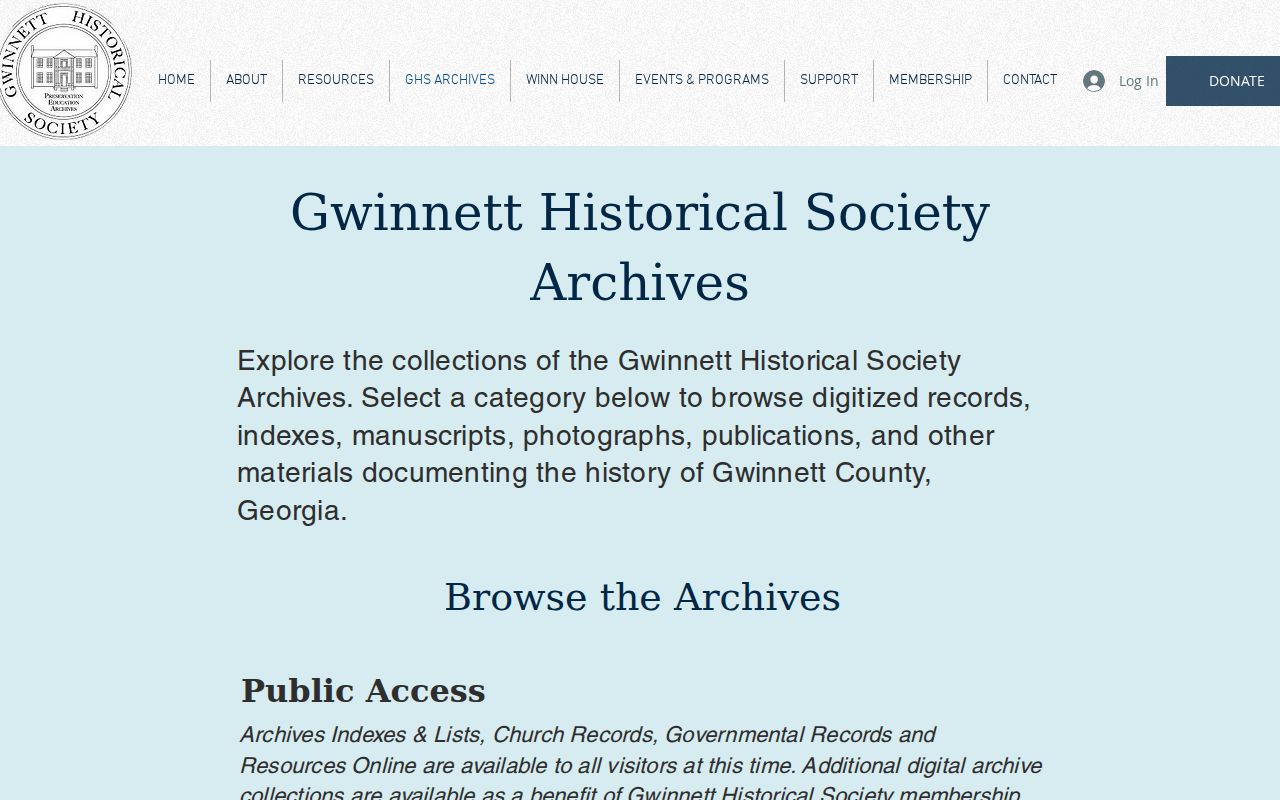
The Gwinnett Historical Society archive is in the Historic Courthouse at 185 West Crogan Street, second floor, Room 210, Lawrenceville. Published hours are Monday, Wednesday, and Friday from 10 a.m. to 2 p.m. The archive lists public categories for Archive Indexes & Lists, Church Records, and Governmental Records. Member categories include cemetery and death files, manuscripts, family papers, published works, and visual materials.
Its genealogy library holds family and county files, maps, microfilm, and surname, church, cemetery, school, and place subject files. Call 770-822-5174 or email ghs@gwinnetths.org before a visit. Ask for the exact item, access category, copying rules, and any appointment requirement. Archive staff can help identify a finding aid, but a catalog inquiry is not proof that a certain city directory year exists.
The official archive page below shows the research gateway used to reach these collections.
Record the collection title, box or binder, folder, page, and image number. Those details let another researcher find the same evidence.
Snellville's Local Binder Index
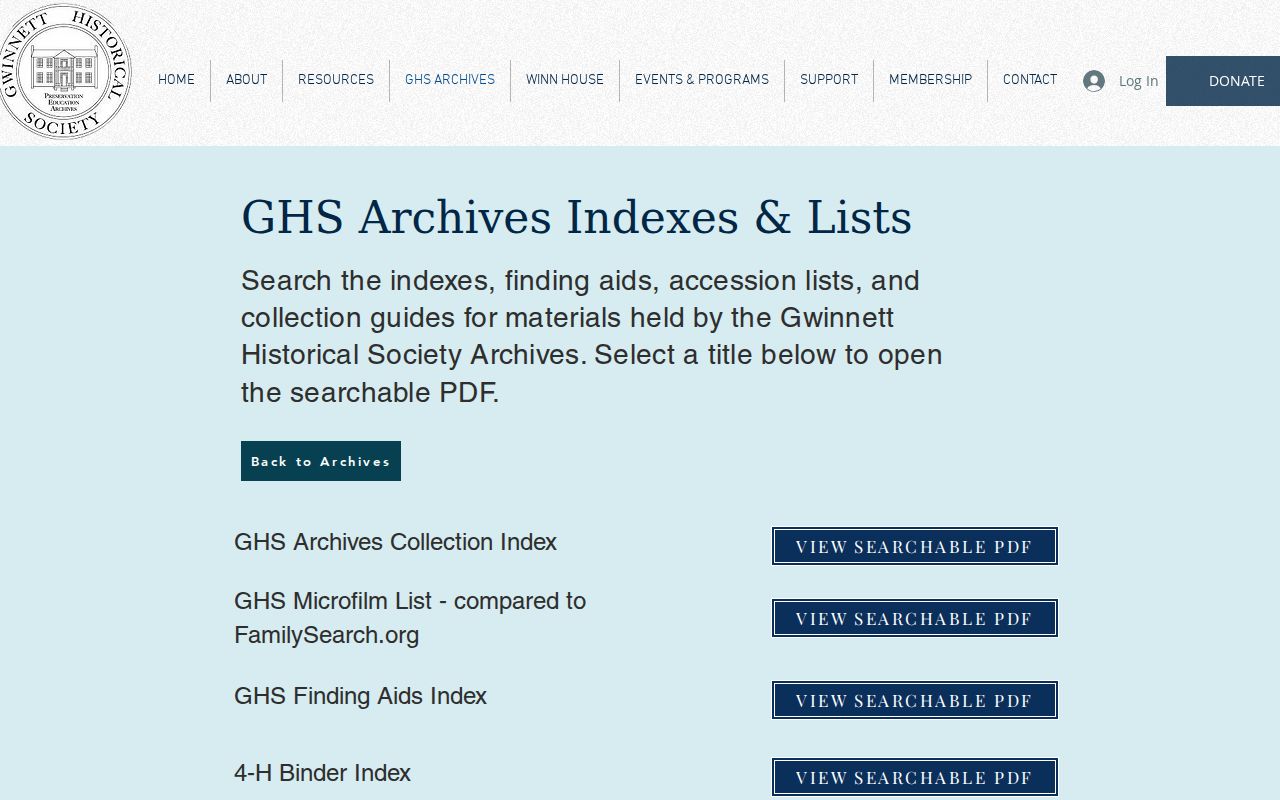
The most place-specific finding aid located is the Rosebud–Snellville–Suwanee binder index. It appears in the Historical Society's public archive indexes and lists. Family binder indexes also run alphabetically, with a master list. Search surname variants, initials, maiden names, and alternate spellings before deciding a person is absent.
The archive indexes page leads to these public finding aids. The index points toward source material; it is not itself proof of each claim in the underlying file. Request the binder or collection citation and read the document in context.
The manifest image below captures that official indexes gateway.
Use the binder to gather spelling and place clues, then confirm them in a dated census, deed, marriage abstract, school record, church list, newspaper, or certificate.
Read a Snellville Directory Entry
If a cataloged city directory or telephone volume includes Snellville, inspect the front matter before reading names. Coverage can exclude rural routes or nearby unincorporated areas. An abbreviation can change the meaning of a line. Photograph the title page, publication year, coverage statement, abbreviation key, and entry. Never treat a generic decoding pattern as proof of what a local volume contains.
| Name | Surname, given name, or initials of the listed person. |
|---|---|
| Spouse or widow notation | A relationship clue whose exact style depends on the key. |
| Occupation or business | Work description printed for that year, if included. |
| Home address | Street or route shown in that edition. |
| Telephone | Subscriber number, when the publication includes it. |
- Criss-cross directory
- A section ordered by street and house number, often naming a listed subscriber.
- Householder index
- An index centered on the person presented as head or listed householder.
- Abbreviation key
- The publisher's legend defining marks, shortened words, and entry codes.
A city directory identifies the subscriber or householder selected by its publisher. It does not establish all residents. Compare any address with deeds, tax records, and census schedules.
Snellville School and Church Lists
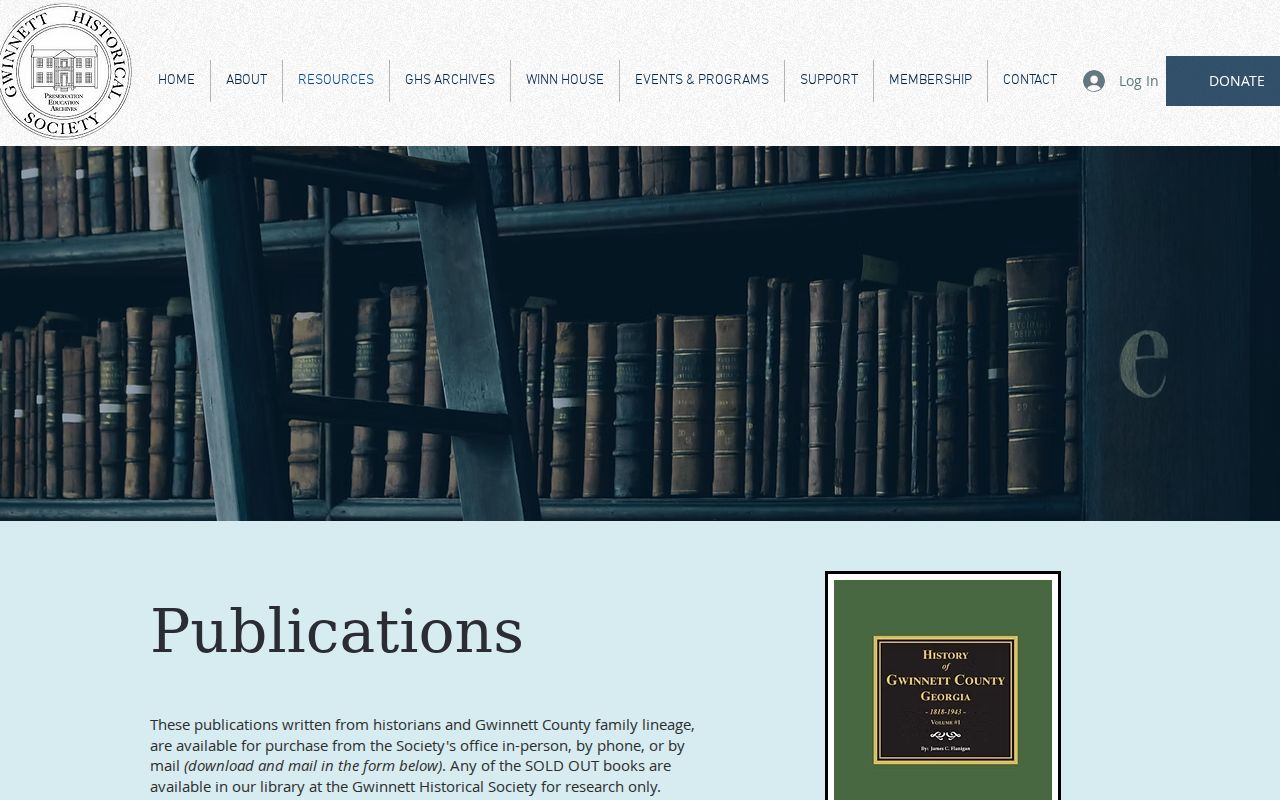
The Historical Society's publications catalog offers community sources that fill years when a directory run cannot be verified. The Snellville Consolidated School history contains students, teachers, photographs, and an index through 1957, when the school became South Gwinnett. It can support classmate and family-history research without implying anyone's current address.
Gwinnett Churches, a reprint of a 1911 work, covers 92 churches and includes membership lists. The 1923 Gwinnett County Schools survey provides school images and teacher names. These rosters describe a community at a date, not a complete population. Cite the page and edition, then compare the name with census, tax, newspaper, marriage, or death evidence.
The publication image below points to the official catalog where the editions are described.
These lists reveal relationships that property records can miss, especially teachers, pupils, and church networks.
Snellville's 1890 Census Substitute
The 1890 federal population census was largely destroyed. Gwinnett's 1890 tax digest supplies a strong local substitute. It lists taxpayers and Georgia Militia District and may include land district, lot, acreage, and value. That can place a person before modern street numbering, especially when paired with a later deed or subdivision plat.
Do not read the digest as a full household schedule. It centers taxable people and property. Search the 1880 and 1900 census transcriptions on either side, check marriage abstracts, then use land and probate files to bridge the gap. This combination may show continuity even when no Snellville city directory was printed for the year.
Digital Snellville Family Sources
The GCPL digital resources page lists Ancestry Library Edition as on-site only. HeritageQuest is remotely accessible with a library card and PIN through GALILEO and includes census schedules, Revolutionary War pensions, and family-history books. News resources include the Atlanta Journal-Constitution and Gwinnett Daily Post. Access terms can change, so follow the library's current description.
The official digital-resources image below shows the source gateway used for genealogy and newspaper access.
Search newspapers for obituaries, legal notices, zoning hearings, probate notices, and community columns. Cite title and date, then confirm the fact with the originating public record when possible.
Snell Letters Return Home
About 130 Snell family letters came to local historians' attention in 2012 after more than a century outside Georgia, including preservation in England and Wisconsin. The correspondence enlarged local knowledge of the Snell and Sawyer period. It also shows why a directory line, census row, or deed cannot tell the whole story of a community.
The Snellville Historical Society, at 2145 North Road, says it holds the city's only historical archival collection. It preserves records, artifacts, and images from Indigenous presence through settlement and modern development. Contact the society at 678-587-5653 or through its web form. Ask for collection-level citation and access terms before quoting a letter.
The society's official site below is the direct source for current contact and collection information.
This local archive supplies context that countywide indexes may not capture, but each historical claim still needs its collection citation.
Trace Snellville Families by Year
Begin with a dated name and place. If a verified directory volume exists, transcribe the entry exactly. If not, start with the strongest dated substitute. Keep negative searches as notes rather than proof that a person left town.
- Find the earliest confirmed appearance in a census, school list, church list, tax digest, marriage abstract, or inspected directory.
- Search surname variants and initials in the Rosebud–Snellville–Suwanee binder and family indexes.
- Pair observations around 1940 and 1950 with the released federal census schedules.
- Use deeds and tax records between census years to connect a name to land or an address.
- Close a trail with newspapers, cemetery evidence, probate, or a 1919 to 1943 death-certificate image.
The GHS family volume Gwinnett County, Georgia Families 1818–2005 contains 461 family histories, 324 photographs, 1,171 pages, and a 39,439-name index. Treat contributed family narratives as leads and verify dates or relationships against original records.
Note: A missing city directory year is a research gap, not proof that the family moved away.