
Walk a Snellville Street
A sound street-by-street search begins with geography, not a surname. Enter the address in the Gwinnett County GIS Data Browser. Choose the matching suggestion, select the parcel, and copy its parcel identification number, or PIN. The PIN ties the map to the assessor record even when punctuation or a street label changes. Work one parcel at a time. The map may show adjoining land, but it does not supply a household roster.
- Normalize the full address with GIS autocomplete and select the parcel polygon.
- Open property information. Record the PIN, situs address, assessed owner, separate mailing address, subdivision, lot, and deed reference.
- Move parcel by parcel with Street Search, pan, and zoom. Keep each PIN with its own address.
- Use the owner and deed book/page in GSCCCA. Match the legal description before joining records.
- Check the correct permit custodian, then consult a verified reverse directory or census for older household evidence.
This sequence turns an address into linked, checkable records. It also prevents the most common street directory error: treating a tax owner as proof of every resident. A trust, company, representative, or person at another mailing point may hold title.
Snellville Street Search Tools
The county browser supports address, parcel, street, and map searches. Street Search autocompletes a road name, while map clicks reveal parcel geometry at a useful scale. Property Info connects a selected shape to tax data. Utilities, transportation, and school tabs add context, not names. The county also says a map can be saved or shared by URL.
| GIS control | Input | Use |
|---|---|---|
| Address Search | Autocomplete address | Choose the suggested property and submit. |
| Search by PIN | Parcel ID | Use the exact tax parcel key. |
| Street Search | Autocomplete street | Submit the road, then browse at parcel scale. |
| Map select | Parcel click | Open attributes and the property link. |
| Context tabs | Map layers | Review transport, school, and utility context. |
Log PINs instead of copying a loose row of names. Adjacent parcels can carry different postal cities or fall on opposite sides of a municipal line. No official radius or buffer report was verified, so use the published street and parcel tools rather than claiming an automated neighbor list.
Snellville Situs and Mailing
The Gwinnett Board of Assessors search accepts owner name, property address, or PIN. Situs means the physical location of the parcel. The owner mailing address is where tax correspondence goes. A mismatch does not prove the owner lives elsewhere. It can point to a post office box, trust, company, representative, or chosen mailing point.
- Parcel or PIN
- The county tax-map identifier for one tract.
- Situs address
- The physical address assigned to the land or improvement.
- Plat
- A recorded map showing lots, dimensions, easements, and subdivision layout.
- Criss-cross directory
- A historical directory sorted by street and house number.
A homestead exemption is consistent with an eligible owner's principal-residence claim. It is not a list of spouses, children, renters, or other occupants. Keep that limit visible whenever a Snellville street directory uses the flag as supporting evidence.
Snellville Records by Address
Several custodians hold different parts of the trail. The assessor and GIS offer the best starting keys. The Tax Commissioner supplies account context. The Superior Court clerk preserves title instruments, while planning offices hold project files according to jurisdiction.
| Address record | Keeper | Evidence | Access |
|---|---|---|---|
| Assessment roll | Board of Assessors | Owner, situs, mailing, PIN, values, exemptions | Free search and map |
| Tax account | Tax Commissioner | Bill, payment, owner/account, tax sale | Free lookup or office |
| Deed or plat | Superior Court clerk | Parties, legal description, book/page | GSCCCA or counter |
| Permit or zoning | City or county planning | Applicant, contractor, scope, date, status | Agenda, portal, or request |
| Voter record | Gwinnett Elections | Public registration name and residence | Requested public file |
The Gwinnett property-tax portal confirms the account side. If a portal fails, contact the assessor or tax office. For deeds, take the PIN, party name, and book/page to the clerk in Lawrenceville. That counter route matters for older books and images unavailable under a web account.
Snellville Deeds Along Streets
Open the current deed reference from the assessor card in the GSCCCA Real Estate Index. A grantor transfers property; a grantee receives it. Search Gwinnett by name and date, then compare instrument type, subdivision, block, lot, legal description, and book/page. The index may show location data, but old deeds are not reliably searchable by situs address.
The statewide system offers county, regional, and statewide modes. Indexed fields include party roles, instrument type, filing date, and property details when supplied. Images depend on account level. The account comparison explains tiers. The clerk's fee page lists copies at $1 per page and certification at $2.50 for the first page plus $1 for each added page.
The official guide below shows why the index is a route to recorded proof, not a live resident roll.
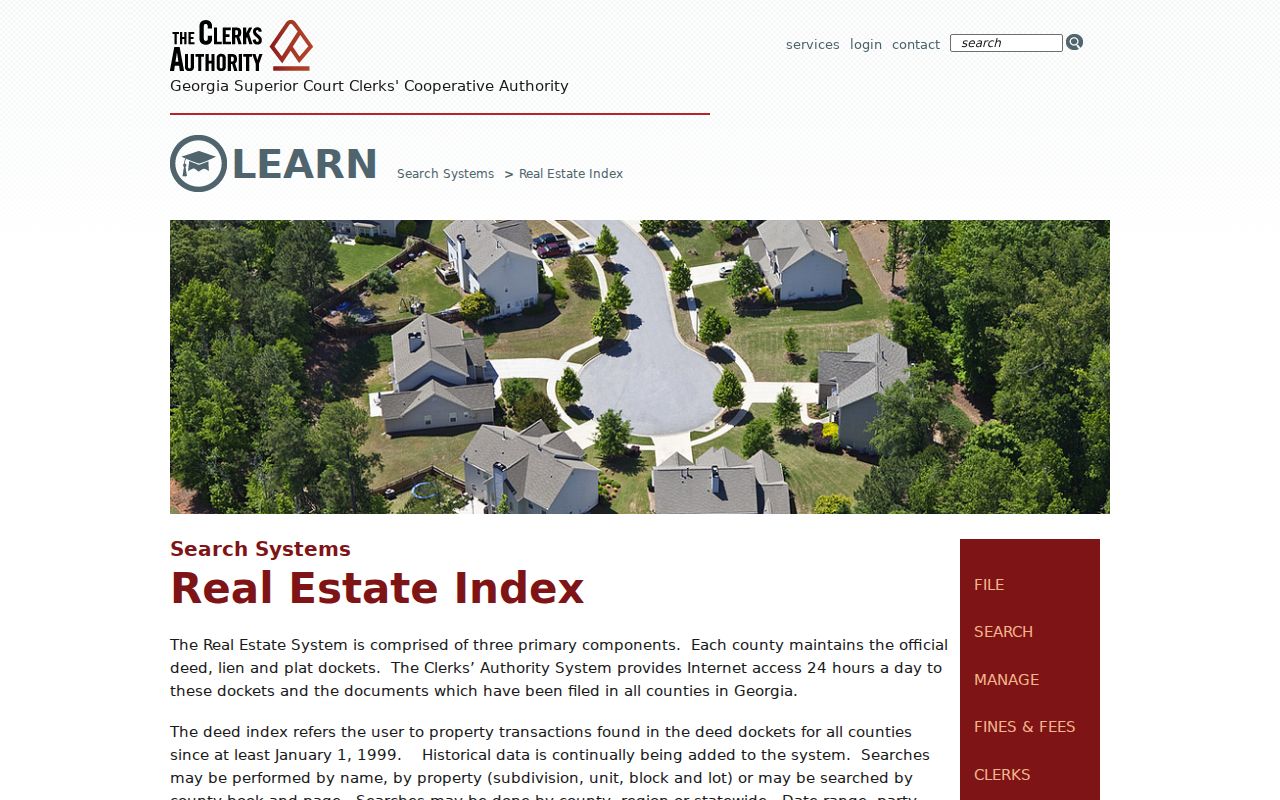
Save the result fields, then inspect the image or obtain a certified copy before reaching a title conclusion. A deed can also contain consideration, preparer, return address, notary data, and prior references, but those fields vary by document.
The official GSCCCA account comparison shows the image-access choices available to a Snellville deed researcher.
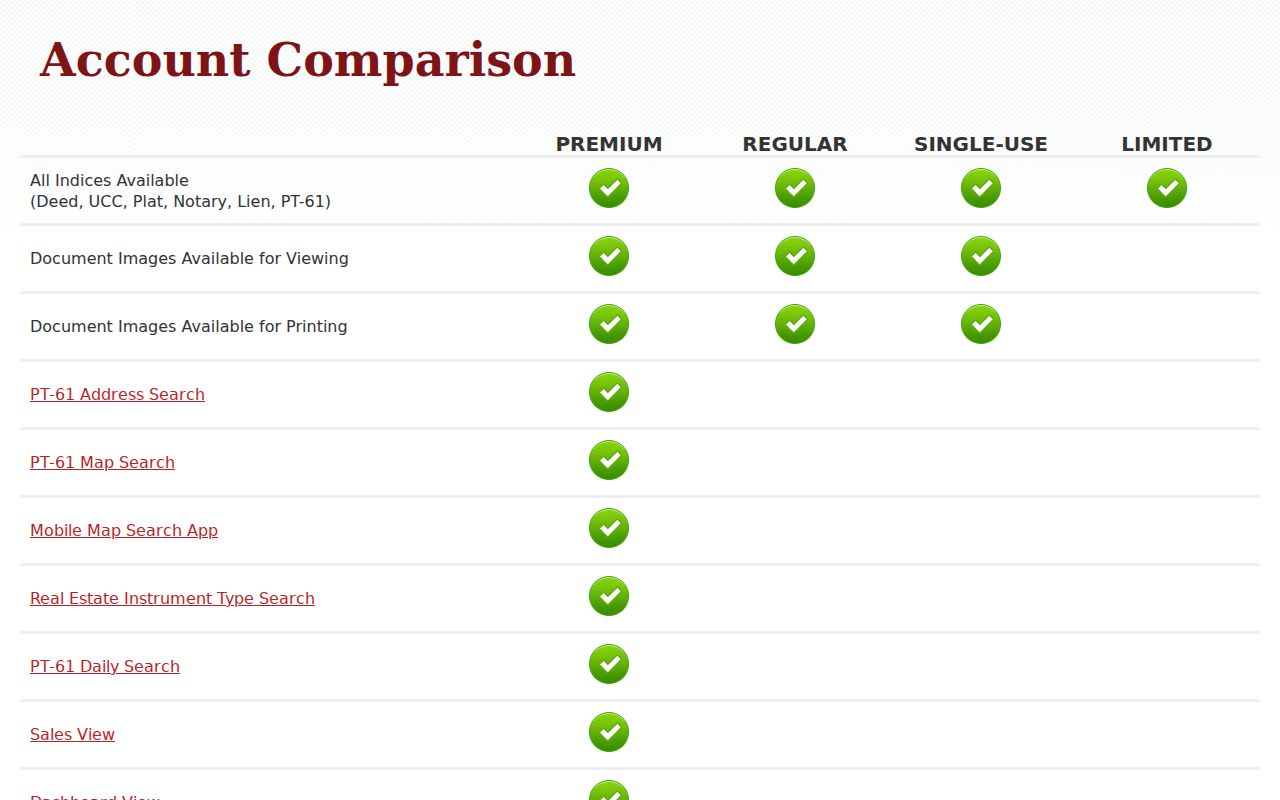
Choose access based on the document task, while remembering that the clerk counter remains the official fallback for copies and older material.
The Gwinnett clerk publishes its current schedule on the deed recording and copy fees page.
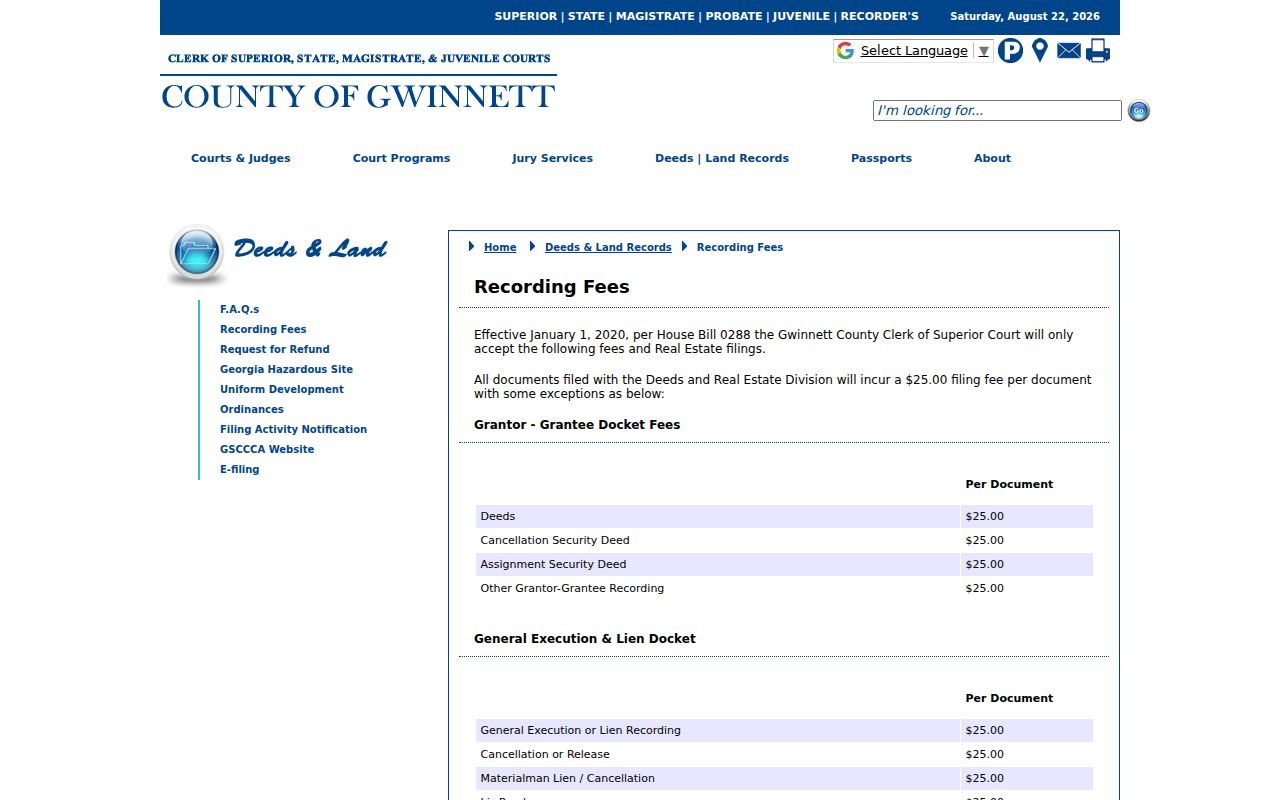
This office schedule distinguishes a paid copy or certification from the index data used to locate the recorded instrument.
Snellville's 1871 Record Break
Gwinnett's surviving real-estate books begin September 26, 1871. Earlier deeds were lost in a courthouse fire. This is a historical break, not just a website cutoff. GSCCCA provides uniform statewide index coverage from at least January 1, 1999, and older Gwinnett material continues to be added, but modern fields do not cover every surviving page alike.
At that boundary, carry book/page and party names to the clerk. Reconstruct older ownership with state land grants or lottery files, tax digests, probate, court minutes, family papers, and later deeds reciting earlier title. The 1890 Gwinnett tax digest can place a taxpayer by Georgia Militia District and may include land district, lot, acreage, and value.
Note: A legal description often survives a renamed road or changed number better than a postal address.
Snellville Property Tax Accounts
The Gwinnett County property-tax portal is the official companion to the assessor roll for bill, payment, account, homestead-administration, and tax-sale information.
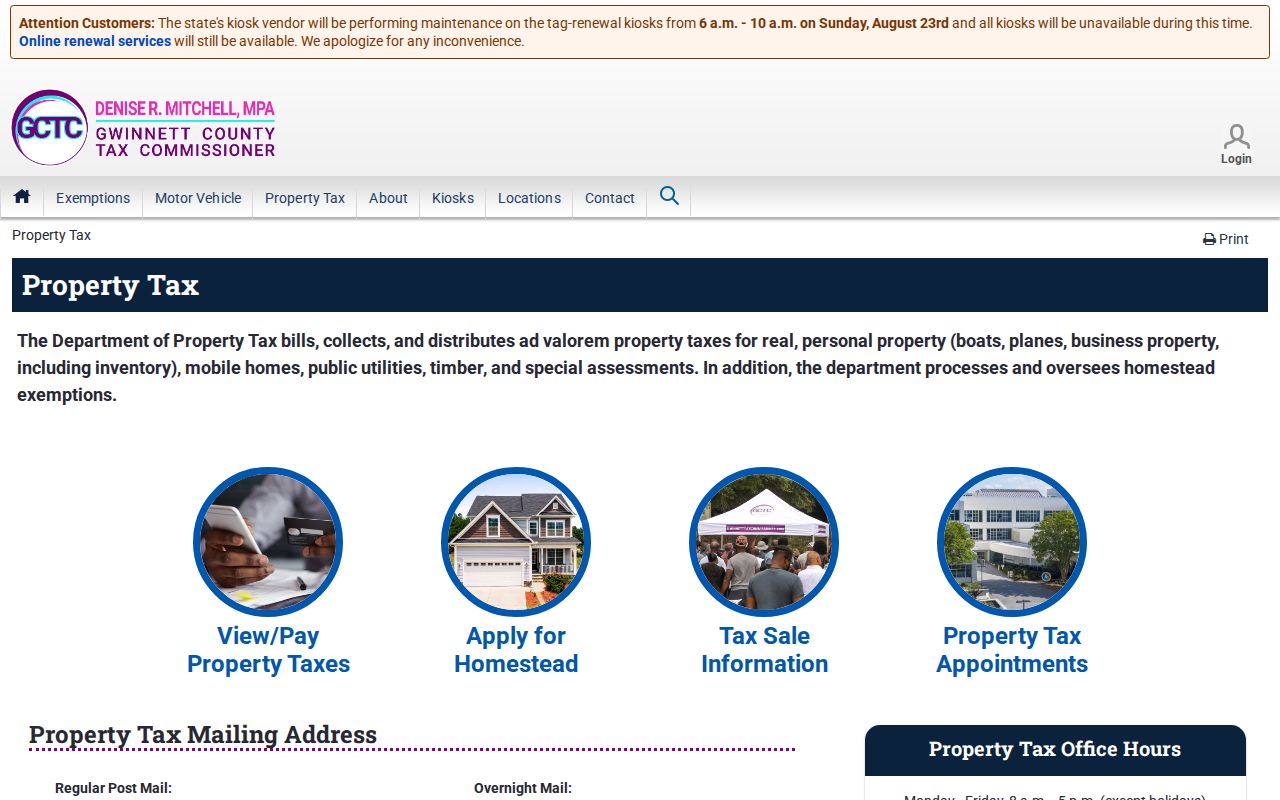
The tax account adds dated account context, but it still does not identify all people who occupy a Snellville property.
Is That Street in Snellville?
A Snellville mailing label does not prove that a parcel lies inside the city. The county ZIP map places 30039 and 30078 around Snellville and shows 30052 at the edge. Postal zones support delivery; they do not choose the planning office. Confirm the parcel in GIS, then inspect the municipal-boundary layer or city zoning map.
For city land, use Snellville Planning and Development or the open-records route. Give the address, PIN, date range, department, and case or permit number. Outside city limits, use Gwinnett County. A file may identify an owner, applicant, contractor, work description, hearing, and decision. It does not prove every occupant.
Snellville Voters by Street
Georgia's My Voter Page is a self-lookup, not a browseable street roll. It asks for first initial, last name, county, and date of birth, then returns status, polling place, districts, sample ballot, and absentee information. It never reveals ballot choices. A properly requested public voter file can contain names and residence addresses under O.C.G.A. § 21-2-225, with protected fields removed.
Absence from that file does not mean absence from an address. Nonregistered people do not appear, and VoteSafe or Georgia's Address Confidentiality Program can shield qualifying survivors. Use a voter record only for the public registration fact it states.
Historical Snellville Street Listings
No authoritative source confirmed a dedicated Snellville city or reverse-directory run. Do not assign a publisher or year without checking the catalog and volume. Snellville was small in much of the classic directory era and may appear in suburban telephone or criss-cross products rather than a stand-alone book.
Ask the Snellville or Centerville library branch and Gwinnett Historical Society about a precise street and year. When found, photograph the title page, coverage statement, abbreviation key, and entry. Read by house number, then compare consecutive years and census schedules. The Snellville historical city directory describes verified substitutes without inventing a run.
Read Snellville Parcel Cards
A parcel card can carry far more than a name and street. Representative fields include the PIN, situs address, assessed owner, owner mailing address, legal description, subdivision, lot, block, land district or land lot when present, property class, acreage, building traits, year built, land value, improvement value, total assessed or fair-market value, tax year, exemptions, sale reference, deed reference, and a map link. Exact fields vary by parcel. Record only what the selected card displays.
Use the PIN as the join key between the street map and property record. Then copy the deed reference exactly. A year-built field dates the improvement shown by the assessor, not the first use of the land or a household's arrival. A sale line may summarize a transfer, but the recorded deed supplies the parties, legal description, execution, recording, and prior-reference detail.
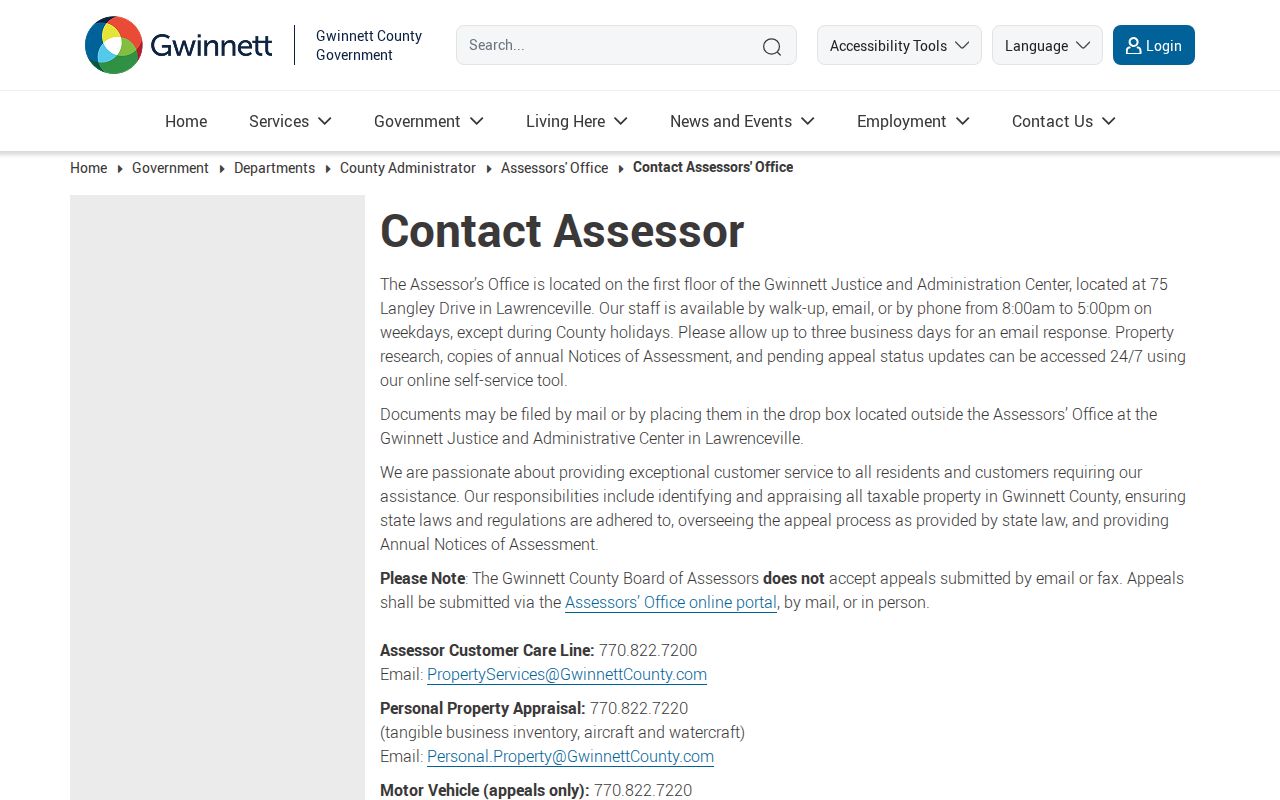
The assessor office is a fallback when the vendor search rejects an address or a card needs explanation. Its official contact page provides the current route to staff. Ask for an existing record by PIN and tax year, not a newly created street roster.
The official source image below identifies that office.
Staff can clarify the roll, but they cannot convert assessed ownership into proof of occupancy. Preserve the card's tax year because names, values, and exemptions may change on later rolls.
Limits of Snellville Street Records
A card identifies an assessed owner, not each resident. A deed records a transaction, not present occupancy. Permits date work. Voter data omits unregistered people and protected addresses. Utility accounts are privacy-sensitive, and motor-vehicle addresses are protected by federal law. These gaps let a street directory support careful property or family research without becoming a household census.
Time also limits the result. The assessment roll reflects a stated tax year, a deed reflects a recorded transfer, and a directory reflects its publication period. None guarantees that a named person remained at the address the next day. Compare record dates and avoid merging people merely because they share a surname. Corporate and trust ownership can also hide the natural person's connection unless the recorded instrument or another official filing explains it.
Requests have boundaries as well. Georgia's Open Records Act covers existing public records, not a demand that an office research a whole street or create a new resident list. Ask for a known permit, case, parcel, deed, or date range. The custodian may redact exempt details. If a record cannot be produced at once, the Act calls for a response within three business days. That response may state availability and estimated cost rather than deliver the record immediately.
Lawful use. Use Snellville address records only for lawful personal research. Never use a street search to stalk, harass, intimidate, or harm anyone.
Verify key facts with the custodian. A certified copy proves what was recorded; an index is a finding aid. When the task shifts to one named person, the Snellville resident lookup keeps that check focused.