
Snellville Previous Residents by Era
No single roll lists every person who occupied a Snellville address. The right source depends on the date and whether the goal is an owner, a listed householder, or a family. Current parcel records supply the stable PIN and legal description. Recorded deeds carry ownership backward. Census, tax, school, church, newspaper, and death sources add people who may never appear in title records.
| Snellville source | Verified period | Where held | Useful evidence |
|---|---|---|---|
| Gwinnett deed books | September 26, 1871 to present | Clerk and GSCCCA | Title holders, land identity, dates, and prior references |
| Federal census | Public releases through 1950 | NARA and library databases | Enumerated households and location details |
| Gwinnett tax digest | 1890 | Gwinnett Historical Society | Taxpayer, district, land lot, acreage, and value where recorded |
| Historic death images | 1919 to 1943 | FamilySearch via Georgia Archives guidance | Death endpoint and family facts |
| Snellville school history | Through 1957 | Gwinnett Historical Society | Students, teachers, photographs, and index |
| City or reverse directories | Exact local years unverified | GCPL or archive catalog inquiry | Listed subscriber or householder if held |
Begin with deeds for ownership after the surviving-record boundary. For people who lived there but did not hold title, turn to the released census and verified local collections. No authoritative year run for a dedicated Snellville city or reverse directory was found. Catalog staff must confirm a relevant volume before it is cited. No Snellville Sanborn map sheet was verified either.
Start With the Snellville Parcel
Enter the address in the Gwinnett property search. Copy the parcel ID, situs address, current owner, owner mailing address, legal description, subdivision and lot, and any deed book and page reference. Situs means the physical location of the land. The mailing address is where the tax office sends correspondence. A difference between them does not prove where an owner lives.
The parcel ID bridges modern maps and older title papers. Street names and postal labels can change, while land district, land lot, subdivision, block, lot, plat, and legal description are stronger matching keys. A homestead exemption may support an owner-occupancy inference. It never lists every person in a household.
Note: Record situs and mailing addresses, but keep them separate in every research note.
Trace Gwinnett Previous Owners
The GSCCCA Real Estate Index is the online path into Gwinnett deeds. Its uniform statewide index reaches at least January 1, 1999, while older local data varies. Results can show parties, indexed roles, instrument type, recording date, county, book and page, and property data when supplied. Image access depends on the account tier. For deeper work, the Gwinnett Deeds and Land Records Division provides the counter and surviving deed books.
- Copy the current deed book and page, parcel ID, and legal description from the assessor card.
- Open the purchase deed. Transcribe the grantee, grantor, dates, prior reference, and land description.
- Search the seller as a grantee in an earlier date range. Restrict the search to Gwinnett and match the same land.
- Repeat the loop. Never connect same-name parties without a matching legal description or cross-reference.
- At the online boundary, take party names and book/page references to the clerk's counter.
- Grantor and grantee
- The grantor transfers an interest. The grantee receives it.
- Chain of title
- The linked sequence of recorded transfers for the same land.
- Legal description
- The deed's land identity, based on district, lot, subdivision, block, plat, or measured boundaries.
- Book and page
- The clerk's reference used to retrieve a recorded instrument.
The direct PT-61 address search is a premium route, but name and book/page chaining are often more dependable because older deeds may lack a consistently indexed situs address. Match the land first. That keeps a common surname from sending a previous residents trail onto another parcel.
Snellville Records Before 1871
Gwinnett's surviving real-estate series begins on September 26, 1871. Earlier deed records were lost in a courthouse fire. This is a physical loss, not merely the start of an online database. A title trail at the boundary cannot continue by assuming an earlier deed exists in the same series.
Reconstruct earlier ownership with state land grants and lottery material, tax digests, probate files, court minutes, census schedules, family papers, and later deeds that recite older title. The 1890 Gwinnett tax digest is vital because the federal population census for that year was lost nationally. It can place a taxpayer by Georgia Militia District and sometimes by land district, lot, acreage, and value.
| Modern index | Standardized statewide coverage from at least 1999, older material varies |
|---|---|
| Surviving deeds | September 26, 1871 forward |
| Earlier evidence | Grants, tax, probate, court, census, and family sources |
Archives for Past Snellville Residents
The Georgia Archives provides catalog, Virtual Vault, research-room, and reference paths. Its guidance says death certificates from 1919 through 1943 are available through FamilySearch with a free account. Later certificates remain with state or local vital-record offices. Georgia has no simple rule that opens every modern certificate after a set age.
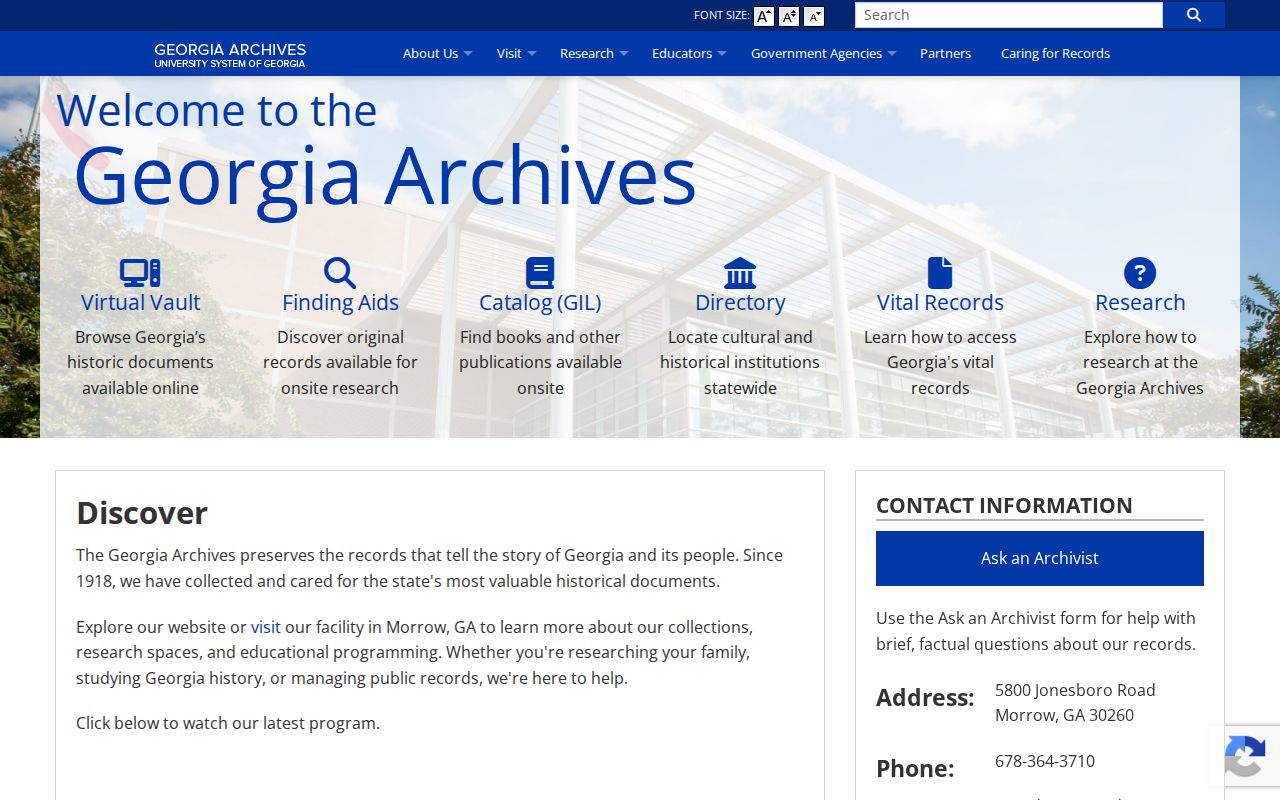
The archive portal helps when a deed trail reaches family papers, state collections, or historical vital guides. Pair those materials with Gwinnett evidence. The research-help page also identifies marriage and divorce index spans and gaps, which helps select the correct custodian.
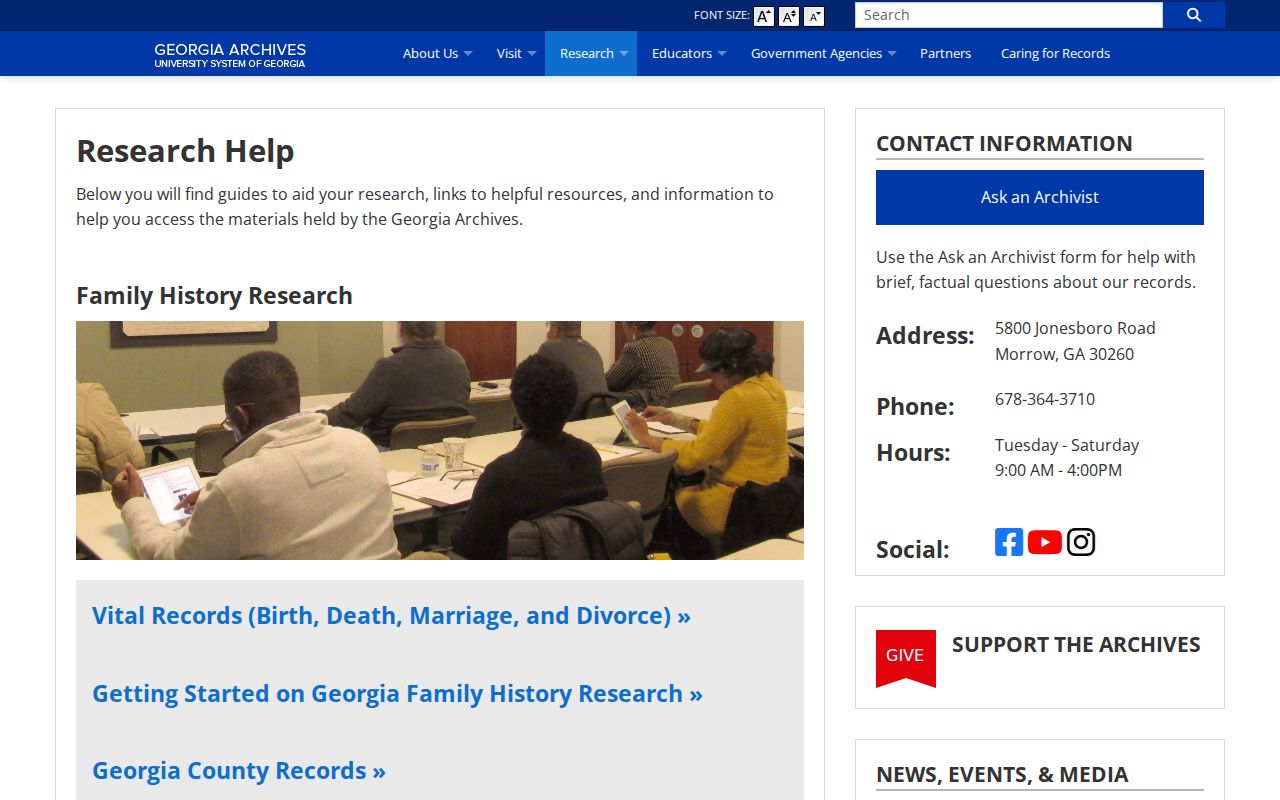
The research-help capture is a practical check against assuming that every statewide index covers every year. Its stated gaps point researchers back to Gwinnett Probate Court, county archives, or another named custodian when the Archives does not hold the needed series.
The separate Georgia Archives vital-records guide explains where historical certificates and marriage sources are kept.
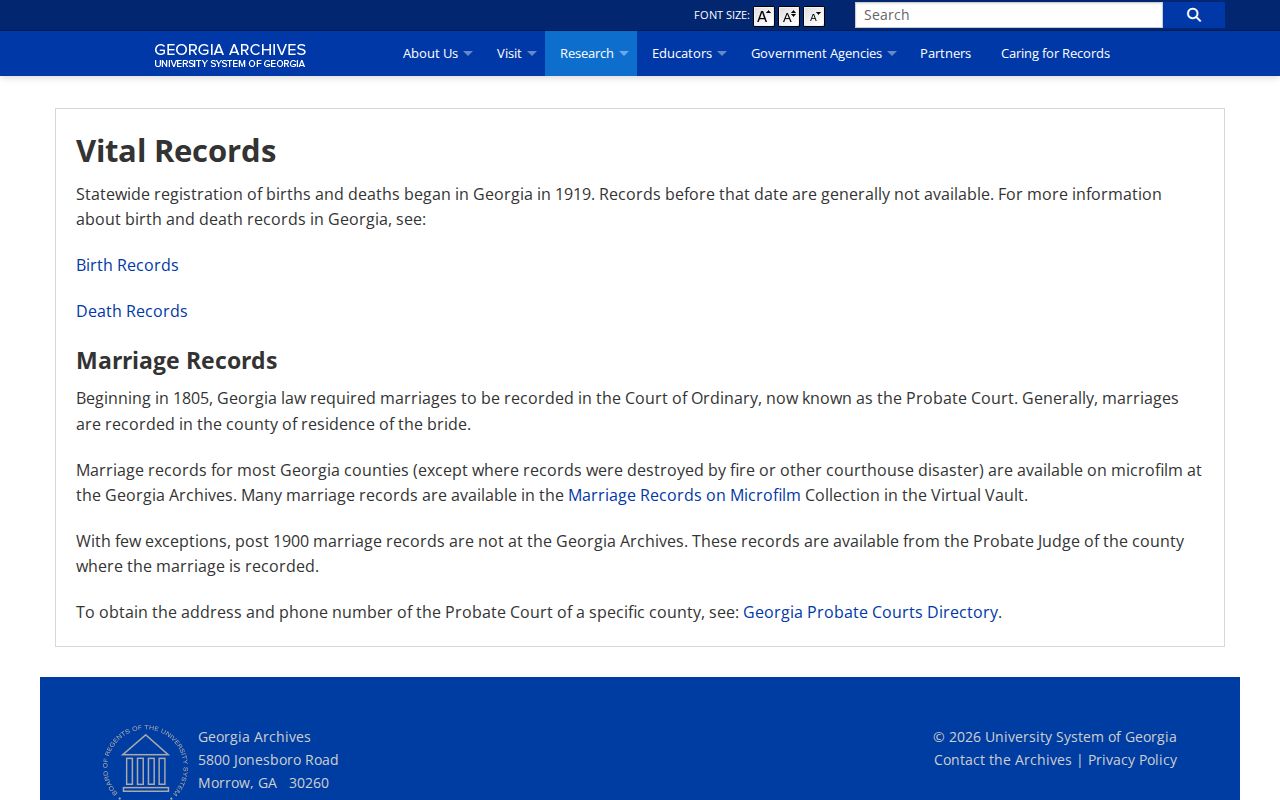
This guide helps close a former resident's trail without treating a restricted modern certificate as an open directory record. Match a historical certificate to the deed, census, obituary, or probate evidence already gathered.
Snellville History Beyond Deeds
The official Snellville history places the community's growth around the Snell and Sawyer settlement of the 1870s and later suburban expansion. That helps explain why a standalone classic city-directory run was not verified. County collections, school and church lists, tax books, census records, newspapers, and telephone sources may prove more useful.
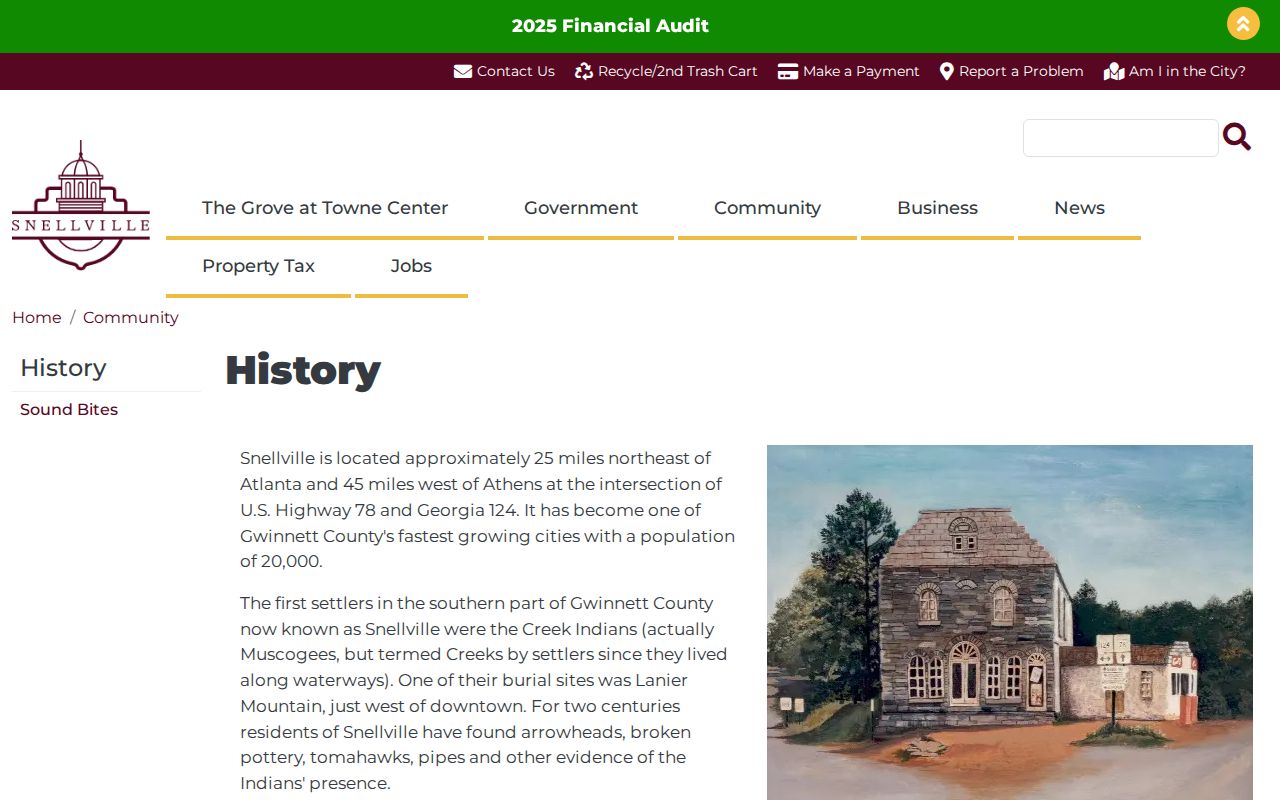
Local history supplies context, not proof of occupancy. Confirm each named person with a dated record tied to the parcel, address, school, church, census place, or family file.
Rebuild Snellville Past Households
Owners are only part of the previous residents story. A released census can name people enumerated together. A verified reverse directory can identify its listed subscriber or householder. School histories, church lists, newspapers, obituaries, cemetery records, and probate files can connect family members and later events. None should be stretched beyond what it states.
- Place the parcel in the correct census geography and search the known owner or householder.
- Transcribe each member, age, relationship, and location detail exactly.
- Check the nearest verified directory or telephone year by surname and reverse street, if a relevant local volume is confirmed.
- Use deeds and tax evidence between census years, then test names in school, church, newspaper, death, cemetery, and probate sources.
- Mark each gap. Absence from one edition does not prove a move.
Gwinnett Historical Society sources include census transcriptions, the 1890 tax digest, a 1911 church history with membership lists, a 1923 school survey, and a Snellville Consolidated School history through 1957. The collection is covered more fully on the Snellville city directory page. Probate files may connect a decedent to heirs and a representative, but read the file rather than infer from a name match.
Lawful use. Research previous residents for house history, genealogy, heir matters, or personal curiosity. Never use an address trail to watch, harass, threaten, or harm a living person.
Building permits can date work and identify an applicant, owner, contractor, or project. They do not prove occupancy. Inside incorporated Snellville, request city records by exact address, parcel, case, and date. Outside the boundary, use Gwinnett County. No exact online permit-archive start was verified.
Snellville Residents in Probate
When a past owner dies, a probate estate can explain how title or family responsibility moved forward. The Gwinnett Probate Court estate division provides filing information for wills, heirs, administrators, and related estate matters. Search the court portal for the decedent, then request the file or certified copy from the clerk when the index alone cannot settle identity.
A probate match is strongest when the decedent's full name, date range, parcel, deed, obituary, and named representative agree. An heir may receive an interest through an estate before a later deed records the transfer. Legal notices and obituaries can lead to the case, but they are not substitutes for the filed papers. Likewise, a return-to address on a deed identifies where a document was sent, not where every party lived.
Death evidence has firm access limits. Historical images in the verified 1919 to 1943 Georgia series can close an older trail, while modern certificates have eligibility rules. Use public indexes, obituaries, cemetery sources, and probate first. Order a certificate only through the proper state or county channel and only when eligible.
Offline Snellville Records Fallbacks
Web access is only one channel. The deed clerk's counter at the Gwinnett Justice and Administration Center in Lawrenceville is the main fallback for older books and certified copies. Clerk and court public hours are generally weekdays from 8 a.m. to 5 p.m., while deed recording and Probate counters close at 4:30 p.m. Confirm current hours and holidays before travel.
The Gwinnett Historical Society archive is in the Historic Courthouse at 185 West Crogan Street, Room 210, Lawrenceville. Its stated hours are Monday, Wednesday, and Friday from 10 a.m. to 2 p.m. The genealogy library includes county publications, maps, microfilm, family files, and subject files for surnames, churches, cemeteries, schools, and places. Public archive indexes include the Rosebud-Snellville-Suwanee binder.
For city-created permits or code records not already online, use the Snellville open-records request. Identify the address, parcel, record type, and date range. Georgia's Open Records Act calls for a response within three business days when a record cannot be produced at once, though that response may give a production time or lawful basis for withholding.